
Why Generic Budgeting Apps Fail Incorporated Healthcare Professionals on Spending
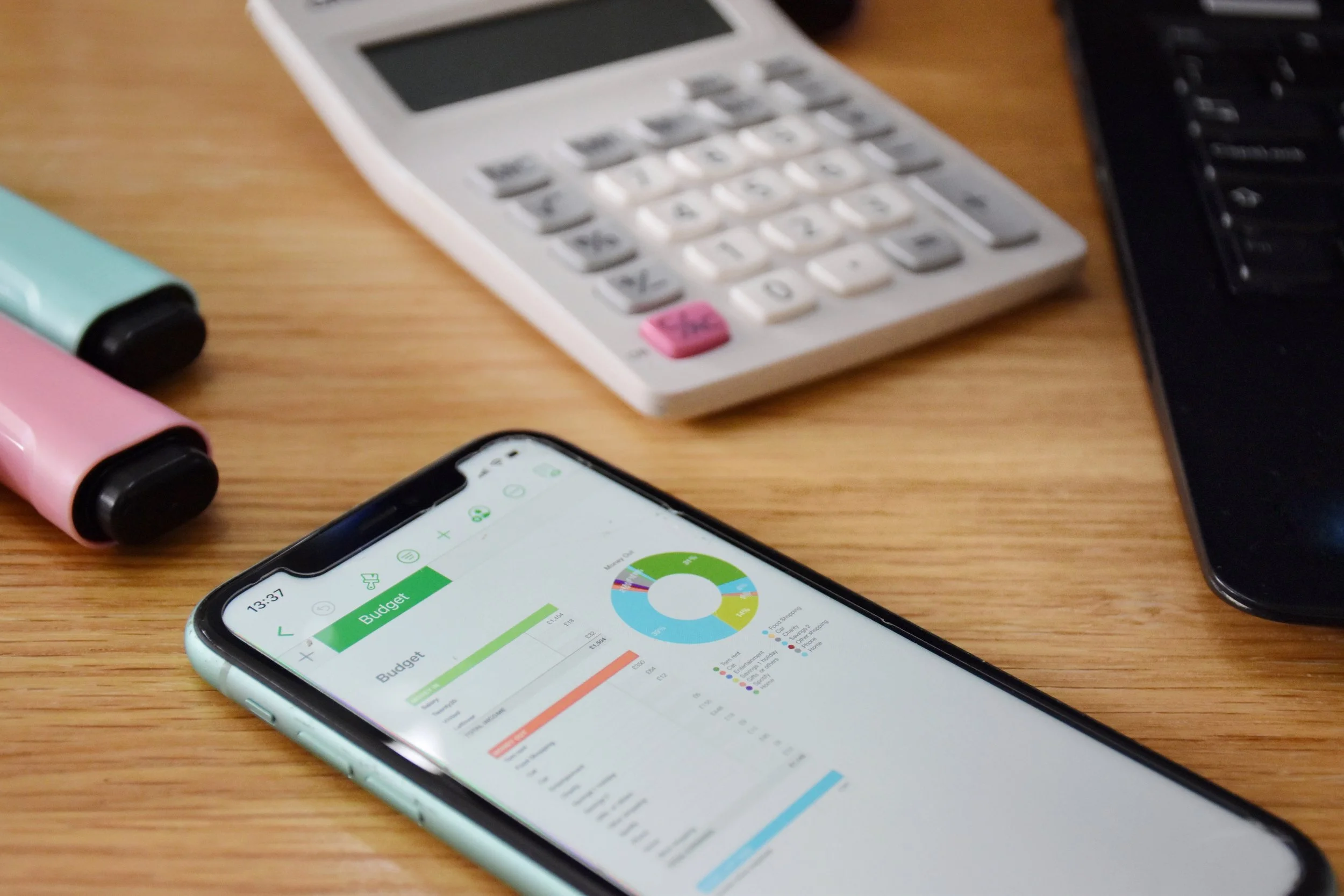
The Spending Tracking Problem That Consumer Apps Were Not Built to Solve
Most incorporated chiropractors, physiotherapists, and registered massage therapists in British Columbia and Ontario who have tried to use a consumer budgeting app to track their spending have encountered the same fundamental problem: the app was designed for a salaried employee with one income stream, one set of accounts, and a straightforward relationship between income received and money available to spend. For an incorporated healthcare professional managing clinical billings in a corporate account, personal salary and dividend income flowing from that corporation, a tax reserve that represents money that is present but not spendable, and a corporate investment account holding retained earnings that are not personal income at all, a consumer budgeting app does not just fall short. It actively misrepresents the financial picture.
The best way to track spending for an incorporated healthcare professional is not a category that consumer personal finance tools were designed to address, because the spending tracking problem for this audience is not simply a matter of categorizing personal expenses. It is a matter of maintaining visibility across two distinct financial layers simultaneously, understanding which dollars at the corporate level are genuinely available for distribution versus reserved for tax, overhead, or investment purposes, and ensuring that personal spending decisions are made against an accurate picture of actual distributable income rather than the corporate account balance that includes funds with other destinations.
This article explains why generic budgeting apps fail incorporated healthcare professionals on spending, what the best way to track spending actually looks like for practitioners managing a professional corporation in BC or Ontario, and how a properly structured spending tracking approach connects to the broader financial management framework that produces long-term financial stability.
Key Takeaways
Generic budgeting apps are designed for salaried employees with a single income stream and fail to account for the two-layer corporate and personal financial structure of incorporated healthcare professionals in BC and Ontario.
The best way to track spending for an incorporated healthcare professional requires separate tracking systems for the corporate layer and the personal layer, connected by a clear understanding of how salary and dividends flow between them.
The most common spending tracking mistake incorporated healthcare professionals make is treating the corporate account balance as an indicator of available personal spending capacity, when in fact that balance includes funds reserved for tax, overhead, corporate investment, and emergency reserves.
Personal spending for an incorporated healthcare professional should be tracked against actual after-tax personal income from salary and dividends, not against corporate billings or gross corporate account deposits.
A spending tracking system that integrates with the annual salary-dividend optimization and tax reserve management decisions provides significantly more financial management value than one that tracks personal expenses in isolation.
A financial advisor who specializes in incorporated healthcare professionals in BC and Ontario can help build the spending visibility framework that connects personal spending decisions to the complete corporate and personal financial picture.
Best Way to Track Spending: Why the Two-Layer Problem Matters
The best way to track spending for an incorporated healthcare professional begins with a clear understanding of why the two-layer corporate and personal financial structure creates a spending tracking challenge that consumer tools are not equipped to address. This is not a minor technical inconvenience. It is a structural mismatch between what budgeting apps are designed to do and what incorporated practitioners actually need to know about their financial position.
A consumer budgeting app like a standard personal finance tracker connects to bank accounts, categorizes transactions, and shows the user how much they spent in different categories relative to their income. For a salaried employee, this works well because income arrives in the personal account, personal expenses are paid from the personal account, and the relationship between what came in and what went out is direct and visible. For an incorporated chiropractor in Kelowna or a physiotherapist in Hamilton, the personal account receives salary and dividends from the corporation, but the relationship between what the corporation earned and what is genuinely available for personal spending is mediated by corporate tax obligations, overhead commitments, emergency reserve requirements, and corporate investment allocations that the personal account view does not capture.
Athena Financial Inc works with incorporated healthcare professionals across British Columbia and Ontario to build financial management frameworks that provide accurate spending visibility across both the corporate and personal layers. The best way to track spending for this audience is not a product recommendation. It is a structural approach that reflects the actual financial architecture of an incorporated practitioner's life. Reviewing how cash flow management works for incorporated healthcare professionals provides the foundational framework within which the spending tracking approach described in this article operates.
Why Generic Budgeting Apps Misrepresent the Financial Picture
The specific ways in which generic budgeting apps fail incorporated healthcare professionals on spending are worth identifying precisely, because understanding the failure modes clarifies what the best way to track spending needs to address in their place.
The first failure mode is income misrepresentation. Most budgeting apps treat all deposits into connected accounts as income. For an incorporated healthcare professional, corporate account deposits represent clinical billings, not personal income. Personal income is the salary and dividends actually drawn from the corporation, which may be a fraction of what the corporate account receives in a given month. An app that connects to the corporate account and treats $15,000 in monthly billings as income is telling the practitioner they have far more available to spend than they actually do after corporate tax, overhead, and reserve obligations are accounted for.
The second failure mode is account commingling. Generic budgeting apps that aggregate all connected accounts into a single financial view combine corporate and personal balances in a way that makes the distinction between corporate funds and personal funds invisible. A chiropractor in Burnaby whose corporate account holds $85,000, including $40,000 in emergency reserves, $25,000 reserved for the next corporate tax installment, and $20,000 available for distribution, does not have $85,000 in personal financial capacity. An aggregated account view that shows this balance alongside personal savings and investment accounts creates a false impression of financial strength that can lead to personal spending decisions made against funds that are not genuinely available.
The third failure mode is the absence of a corporate expense tracking layer. Personal budgeting apps track personal expenses. They do not track corporate expenses, which for an incorporated healthcare professional in BC or Ontario include clinic rent, professional liability insurance, equipment costs, associate wages if applicable, and the corporate payroll processing costs associated with salary payments. Without visibility into corporate expenses, the practitioner cannot accurately calculate net corporate income available for distribution, which means the personal spending picture is incomplete regardless of how accurately personal expenses are categorized. Reviewing why tracking cash flow is important for incorporated healthcare professionals clarifies what the complete financial visibility picture looks like and why the personal expense view alone is insufficient.
The Best Way to Track Spending: A Two-Layer System
The best way to track spending for an incorporated healthcare professional in BC or Ontario is a two-layer system that tracks the corporate and personal financial layers separately and connects them through a clear picture of how salary and dividends flow between them. This system does not require sophisticated software. It requires a structured approach that reflects the actual financial architecture of an incorporated practitioner's financial life.
The corporate tracking layer monitors clinical billings received, corporate expenses paid, salary processed, dividends declared, tax reserve balance, emergency reserve balance, and corporate investment contributions. This layer answers the question: what did the corporation earn, what did it spend on operating obligations, and what remains for distribution to the individual shareholder and investment? The tracking can be maintained through accounting software used by the corporate accountant, a simple spreadsheet that the practitioner updates monthly, or a combination of both. What matters is that the corporate tracking layer exists and is updated with enough frequency to provide an accurate picture of the corporate financial position before any distribution decision is made.
The personal tracking layer monitors salary received, dividends received, personal tax obligations including installment payments and the personal tax reserve balance, personal fixed obligations including housing costs, insurance premiums, and debt service, personal variable expenses, registered account contributions, and personal savings and investment balances. This layer answers the question: what personal income did I receive from the corporation, what are my personal financial obligations, and what remains for discretionary spending and wealth accumulation? Consumer budgeting apps can serve the personal tracking layer adequately when they are connected only to personal accounts and used with the understanding that salary and dividends represent genuine personal income while corporate account deposits do not. Reviewing how financial management works for new healthcare professionals clarifies how the two-layer structure is established correctly from the beginning of an incorporated career.
The Key Metric: Distributable Corporate Income
The most important spending visibility metric for an incorporated healthcare professional, and the one that generic budgeting apps consistently fail to surface, is distributable corporate income: the amount of corporate net income that is genuinely available for distribution to the individual shareholder after all corporate obligations have been met.
Distributable corporate income is calculated by taking net corporate billings received in the period, subtracting corporate operating expenses, subtracting the salary already processed for the period, subtracting the amount needed to maintain the tax reserve at its target level, subtracting the amount needed to maintain the emergency reserve at its target level, and identifying what remains as genuinely available for dividend distribution or corporate investment. This figure is the correct basis for personal spending decisions that depend on corporate distributions, because it reflects the actual financial position of the corporation rather than the gross account balance.
For a physiotherapist in Ottawa whose corporate account shows a balance of $60,000 at the end of a quarter, the distributable corporate income calculation might reveal that $20,000 is reserved for the upcoming corporate tax installment, $40,000 represents the funded emergency reserve that is not available for distribution, and the billing cycle has not yet closed for the month, meaning recent billings are not yet reflected in the balance. In this scenario, the distributable corporate income for the quarter may be closer to zero than the $60,000 account balance suggests. Making a personal spending decision against the $60,000 balance without this calculation is the most common and most costly spending tracking error incorporated healthcare professionals make. A financial advisor who walks through the distributable income calculation quarterly ensures this error does not silently erode the corporate financial structure. Reviewing how cash flow management is structured for incorporated healthcare professionals provides the framework for understanding how distributable income fits within the complete corporate cash flow picture.
Tools and Approaches That Support the Two-Layer System
While generic consumer budgeting apps are poorly suited to the incorporated healthcare professional's spending tracking needs, there are tools and approaches that support the two-layer system more effectively when applied with the correct structural framework in mind.
At the corporate layer, accounting software used by the corporate accountant, whether a cloud-based platform that provides the practitioner with read access or a simpler spreadsheet maintained alongside the accountant's records, provides the most reliable corporate expense and balance tracking. The key is that the practitioner has access to a current and accurate corporate financial picture on at least a monthly basis, not just at year-end when the accountant prepares the corporate return. Many incorporated healthcare professionals in BC and Ontario receive a corporate financial summary only at tax filing time, which means they are making distribution and spending decisions throughout the year without reliable corporate layer visibility. Requesting monthly or quarterly management accounts from the corporate accountant is the most straightforward improvement available to practitioners who currently lack corporate layer visibility.
At the personal layer, a simple tracking approach that records salary and dividend income received, maps fixed personal obligations against that income, and tracks variable spending against the remaining balance is sufficient for most incorporated healthcare professionals. The personal tracking does not need to be sophisticated. It needs to be accurate, current, and connected to the corporate distributable income calculation that determines how much personal income is genuinely available in each period. An RMT in Surrey or a chiropractor in Markham who maintains a monthly personal income and expense summary alongside a quarterly corporate distributable income calculation has the spending visibility needed to make personal financial decisions correctly without a sophisticated budgeting app. Reviewing what a financial advisor does for incorporated healthcare professionals clarifies how the spending visibility framework connects to the broader financial planning and coordination function that a specialized advisor provides throughout the year.
Connecting Spending Visibility to the Broader Financial Plan
The best way to track spending for an incorporated healthcare professional is not valuable in isolation. Its value comes from how it connects to the broader financial plan, specifically how spending visibility enables better salary-dividend decisions, more accurate tax reserve management, more deliberate registered account contributions, and more informed corporate investment decisions.
When a practitioner has accurate visibility into both corporate and personal spending, the annual salary-dividend optimization becomes a data-driven decision rather than an estimate. If the personal spending tracker shows that personal variable expenses have increased significantly over the prior year, the salary-dividend structure may need to be adjusted to provide adequate personal liquidity without increasing dividend distributions in a way that creates personal tax inefficiency. If the corporate tracker shows that operating expenses have increased due to a rent renewal or equipment purchase, the distributable income available for personal distribution is lower than the prior year's structure assumed, and the personal spending plan needs to reflect that reduction.
The registered account contribution planning also benefits directly from spending visibility. A physiotherapist in Mississauga who tracks personal spending accurately knows exactly how much salary income is available each month after fixed obligations, which tells her precisely how much she can direct toward monthly TFSA contributions and how much she needs to accumulate over the year for the March RRSP contribution. This level of precision prevents the situation where the RRSP contribution window arrives in February and the practitioner discovers the personal account does not hold enough liquid savings to make the planned contribution without disrupting other financial obligations. Reviewing how the RRSP vs TFSA decision works for incorporated healthcare professionals clarifies how spending visibility supports better registered account contribution decisions throughout the year.
If you are an incorporated chiropractor, physiotherapist, or RMT in British Columbia or Ontario who has been using a generic budgeting app or no structured spending tracking approach at all, the financial management gap between your current visibility and the two-layer system described in this article is worth addressing. Athena Financial Inc and Ken Feng work with incorporated healthcare professionals across both provinces to build the financial visibility framework that makes personal spending decisions informed by the complete corporate and personal financial picture rather than the partial view that consumer tools provide. Reach Ken directly by phone or WhatsApp at +1 604 618 7365, or book a complimentary financial assessment at athenainc.ca/free-assessment to understand what the best way to track spending looks like for your specific corporate structure, billing level, and financial management needs in BC or Ontario.
Frequently Asked Questions About Best Way to Track Spending
Why do consumer budgeting apps fail incorporated healthcare professionals specifically?
Consumer budgeting apps are designed for individuals with a single income stream flowing directly into personal accounts. For incorporated chiropractors, physiotherapists, and RMTs in BC and Ontario, clinical billings arrive in a corporate account that belongs to the professional corporation rather than the individual, and personal income flows from the corporation through salary and dividend distributions. A consumer app that connects to the corporate account misrepresents corporate billings as personal income, and one that connects only to personal accounts misses the corporate financial picture entirely. Neither view provides the complete financial visibility that an incorporated practitioner needs to make accurate personal spending decisions.
What is distributable corporate income and why does it matter for spending decisions?
Distributable corporate income is the amount of net corporate income remaining after all corporate obligations have been met, including operating expenses, salary payments, tax reserves, and emergency reserve maintenance. It represents the amount that is genuinely available for dividend distribution to the shareholder or for corporate investment. For incorporated healthcare professionals in BC or Ontario whose corporate account balance may appear substantial while being largely committed to reserved purposes, distributable corporate income is the correct metric for evaluating whether a dividend distribution or increased personal spending is financially appropriate in a given period.
How often should an incorporated healthcare professional review their corporate spending and cash position?
Monthly reviews of the corporate financial position are the minimum standard for incorporated healthcare professionals in BC and Ontario. A monthly review confirms that operating expenses are tracking within budget, that the tax reserve is being funded adequately, that the emergency reserve remains at its target level, and that the billing receivables are being collected on schedule. Quarterly reviews aligned with the dividend declaration schedule provide the additional detail needed to determine the appropriate distribution for the period. Annual reviews with a financial advisor update the salary level, dividend schedule, and spending plan based on actual prior-year outcomes and projected current-year income.
Can I use a spreadsheet instead of accounting software to track corporate spending?
Yes, and for many incorporated healthcare professionals with straightforward corporate finances, a well-structured spreadsheet maintained alongside the corporate accountant's records provides adequate tracking. The spreadsheet should track monthly billings received, corporate expenses by category, salary processed, dividend distributions, tax reserve balance, and emergency reserve balance. The critical requirement is that the spreadsheet is updated with actual transactions rather than estimates and that it is reviewed regularly enough to inform distribution and spending decisions in real time rather than retrospectively. A financial advisor can help design the spreadsheet structure that captures the corporate layer information most relevant to the practitioner's specific corporate financial situation in BC or Ontario.
Should my corporate and personal spending tracking be integrated into a single system?
For most incorporated healthcare professionals in BC and Ontario, separate tracking systems for the corporate and personal layers are preferable to a single integrated system, because the two layers operate under different tax rules, use different account types, and answer different financial management questions. The corporate tracking system answers questions about net corporate income, distributable income, and corporate cash position. The personal tracking system answers questions about personal income received, personal obligations, and personal spending capacity. The connection between the two systems is the salary and dividend flows that move between them, which should be clearly visible in both the corporate outflow records and the personal income records. A single integrated system that does not clearly separate the two layers tends to reproduce the commingling problem that makes consumer budgeting apps inadequate for this audience.
How does spending tracking connect to the annual tax planning process for an incorporated healthcare professional?
Accurate spending tracking at both the corporate and personal level provides the data that makes annual tax planning decisions more precise. At the corporate level, knowing actual operating expenses and net corporate income allows the financial advisor and accountant to model the salary-dividend optimization with current data rather than prior-year estimates. At the personal level, knowing actual personal spending against received salary and dividends allows the practitioner to evaluate whether the current compensation structure provides adequate personal liquidity or whether an adjustment is needed. Both inputs are essential to the mid-year tax planning review that Athena Financial Inc conducts with incorporated healthcare professionals in BC and Ontario as part of the proactive annual financial planning calendar.
What is the most important change an incorporated healthcare professional can make to improve their spending visibility immediately?
The most immediately impactful change is requesting monthly or quarterly management accounts from the corporate accountant that show actual corporate income, expenses, and net position rather than waiting for the annual corporate tax return to reveal the prior year's financial picture. Most incorporated healthcare professionals who lack corporate layer visibility are not receiving regular financial reporting from their accounting relationship, which means they are making distribution and spending decisions throughout the year without accurate corporate financial data. Establishing a regular reporting cadence with the accountant, even a simple monthly email summary of corporate income and expenses, provides the corporate layer visibility that the personal spending tracking system needs to function correctly within the two-layer framework.
Conclusion
The best way to track spending for an incorporated healthcare professional in BC or Ontario is not a consumer budgeting app. It is a deliberately structured two-layer system that tracks the corporate and personal financial layers separately, connects them through a clear picture of salary and dividend flows, and provides accurate visibility into distributable corporate income as the correct basis for personal spending decisions.
Generic budgeting apps fail this audience not because they are poorly designed for their intended purpose but because their intended purpose is a fundamentally different financial situation than the one an incorporated chiropractor, physiotherapist, or RMT manages every month. The practitioners who build the two-layer spending visibility framework described in this article make better distribution decisions, manage tax reserves more accurately, contribute to registered accounts more consistently, and arrive at each annual financial review with data that supports better planning decisions. Those who rely on consumer tools or no structured tracking approach consistently make spending decisions against an incomplete and often misleading picture of their actual financial position, and the cost of that visibility gap compounds quietly across a clinical career until it becomes visible in the financial outcomes that result.
